
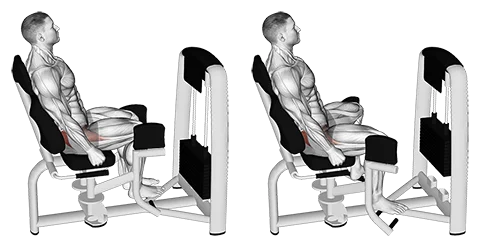
_Hips_small.png)
_Hips_small.png)
_Hips_small.png)
_Hips_small.png)
_Hips_small.png)
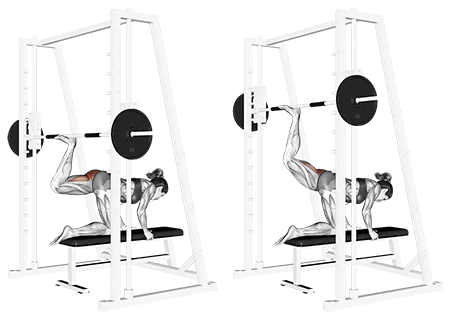
The glutes are the powerhouse of your posterior chain. Strong glutes don’t just look good — they’re essential for athletic performance, injury prevention, and everyday strength. Whether you’re squatting, sprinting, or just standing tall, your glutes are doing the work.
What Counts as a "Glute" Exercise?
In Volym, glute-focused movements target:
- Gluteus Maximus: The main driver of hip extension and power.
- Gluteus Medius & Minimus: Important for hip stability and balance.
- Hip Abductors & External Rotators: Support alignment and knee tracking.
Good glute training includes a mix of extension, abduction, and stability work.
Popular Glute Exercises
Here are some of the most effective glute builders in the app:
- Hip Thrusts & Bridges: Direct glute activation with maximum contraction.
- Lunges & Split Squats: Unilateral strength with a glute-friendly stretch.
- Romanian Deadlifts: Target the glutes and hamstrings through the hinge.
- Cable Kickbacks & Band Work: High-volume isolation with control.
- Step-Ups & Bulgarian Splits: Great for glute and balance development.
💡 Pro tip: Focus on feeling your glutes work — slower reps and pauses at the top can make a big difference in activation.
Equipment for Glute Training
You can build your glutes with almost any tool:
- Barbells for hip thrusts, squats, RDLs
- Dumbbells for lunges, step-ups, deadlifts
- Cables for kickbacks, abductions
- Bands for activation and high-rep finishers
- Bodyweight for bridges and bodyweight glute circuits
Try combining heavy lifts with targeted isolation work for best results.
Final Thoughts: The Math of Progression
Glutes are essential for everything, not just the mirror. They protect your knees and lower back by providing the structural foundation that the hamstrings alone cannot.
But getting stronger isn't just showing up—it's about consistent, measurable overload. If you train your glutes the same way and with the same weight for months, you will plateau. Progress requires increasing the total work, whether that's lifting heavier, doing more reps, or increasing the overall time under tension.
Don't just log the exercises; log the work. Tracking your total volume (weight × reps × sets) is the only way to prove you are progressing and actually making the muscles bigger and stronger.
Programming Your Glute Strength
Glute development isn't about doing one exercise; it's about systemic overload. If you only do hip thrusts, you're neglecting stability. If you only do cable kickbacks, you aren't building peak power. Effective programming requires variation and targeted progression across movement patterns.
When you design a glute workout, structure it like this:
- The Power Lift (Heavy Compound): Start with a movement that moves the most weight (e.g., Hip Thrusts or Heavy RDLs). Focus on moving heavy loads with perfect form. This is your key overload lift.
- The Stability Lift (Unilateral): Follow up with exercises that challenge single-limb stability (e.g., Bulgarian Splits or Split Squats). These force the glute medius to work hard to keep your knee aligned.
- The Volume/Finisher (Isolation): Finish with high-rep, controlled movements (e.g., Banded Abductions or Kickbacks). The goal here is metabolic stress and pure volume—getting blood into the muscle.
Always aim to progress your total work volume across these categories week over week.
2–3 times a week works well, mixing heavy compound lifts with higher-rep isolation work.
Hip thrusts are top-tier for activation, but don’t skip lunges, RDLs, or step-ups — they all play a role.
Yes — especially with tempo, volume, and bodyweight progressions. Bands and bodyweight circuits can be surprisingly effective.
Simply adding weight isn't enough. Overloading means increasing total tonnage (weight x reps x sets) or increasing the time under tension. If you hit the same numbers week after week, you aren't stressing the muscle enough to adapt.
Strength focuses on moving the heaviest weight possible (lower reps, high tension). Hypertrophy focuses on maximizing time under tension and volume (moderate weight, higher reps). A balanced routine uses both.