
_Cardio_small.png)
_Cardio-FIX_small.png)
_Cardio_small.png)
_Cardio_small.png)
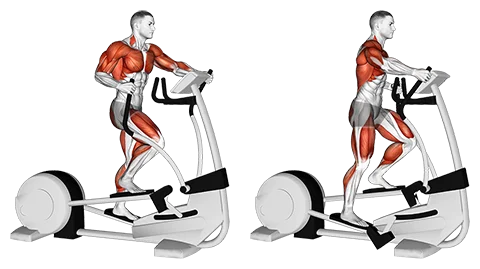
Cardio isn’t just about sweating — it’s about building a healthier heart, improving endurance, and boosting your recovery between strength sessions. Whether you’re into low-impact steady work or high-intensity intervals, this category has something for every fitness level.
What Counts as a "Cardio" Exercise?
Cardio exercises are movements that elevate your heart rate and keep it there. In Volym, these include:
- Steady-State Work: Light jogging, cycling, rowing, incline walking.
- High-Intensity Intervals (HIIT): Sprints, jump rope, battle ropes, sled pushes.
- Dynamic Bodyweight Circuits: Burpees, mountain climbers, jumping lunges.
- Low-Impact Options: Step-ups, air bike intervals, sled drags.
You can use cardio for conditioning, fat loss, warm-ups, or active recovery — it all depends on intensity and intent.
Popular Cardio Exercises
Here are some go-to movements you'll find in Volym:
- Jump Rope: Simple, portable, and effective.
- Sled Pushes & Drags: Builds power while keeping you breathless.
- Rowing Machine: Full-body, low-impact endurance work.
- Burpees & Jumping Jacks: Bodyweight classics for high reps or intervals.
- Kettlebell Swings: Strength + cardio in one explosive move.
💡 Pro tip: Use a timer (like EMOM or Tabata) to structure your cardio for consistency and progression.
Equipment for Cardio Training
Cardio doesn't always mean treadmills. In Volym, you'll find:
- Bodyweight
- Kettlebells
- Plates or Sleds
- Machines like bikes, rowers, or ski-ergs
- Other for ropes, sandbags, and more
Don’t be afraid to get creative — cardio can be loaded, light, or bodyweight only.
Structuring Your Cardio for Progress
Cardio isn't a punishment; it's a variable that optimizes recovery and enhances overall athletic capacity. The key is not just to sweat, but to apply structure and load. Just like weightlifting, cardio needs progressive overload.
Instead of doing the same jog or ride every time, consider:
- Increasing Duration: Staying in the zone for longer periods (e.g., moving from 20 minutes to 30 minutes).
- Increasing Intensity: Pushing harder intervals or adding more resistance (e.g., adding a slight incline or using heavier sleds).
- Variety: Cycling, running, and rowing all tax different muscle groups and energy systems. Varying modes prevents plateaus and keeps the body adapted.
Remember, consistency and measurable progress matter more than the activity itself.
Cycling Cardio: The Endurance Spectrum
Not all cardio is created equal. Understanding the intent—whether it's endurance, power, or pure conditioning—determines the best method.
Endurance (Steady State): Keeps your heart rate in a specific, maintainable zone (Zone 2). Best for building a massive aerobic base and improving recovery efficiency. This is about time under tension and consistency.
Power/Intervals (HIIT): Short bursts of maximal effort followed by brief recovery. This spikes your metabolism, improves V02 max, and rapidly builds anaerobic capacity.
Strength Integration (Loaded Cardio): Using resistance while moving—like weighted lunges or kettlebell swings. This treats the cardio session as a true metabolic lift, maximizing muscle recruitment.
2–4 sessions per week is great for most. You can alternate high and low intensity depending on your goals and recovery.
Definitely. As long as you’re recovering well and eating enough, cardio won't kill your gains.
The one you can stick with. HIIT burns more in less time, but steady-state is easier to recover from — both work.
Think of it as metabolic volume. By tracking total duration, distance, or calculated power (for cycling/rowing), you can measure cardiovascular load and apply progressive overload just like you do with weightlifting.
Not necessarily. High-quality HIIT sessions can improve your conditioning and enhance recovery capabilities, allowing you to push harder in the gym, provided you prioritize nutrition and sleep.
The one you can stick with. Trying to do too much too soon leads to burnout. Finding a manageable routine and progressively increasing the difficulty is the key to long-term improvement.